


What is an umbilical hernia?
An umbilical hernia is a bulge at the belly button, where fat or bowel pushes through a gap in the muscle wall. In adults the gap is often just above or beside the navel rather than exactly at it; this is called a paraumbilical hernia. Both are treated the same way.
Many babies are born with an umbilical hernia, and most of these close on their own in early childhood. In adults the gap does not close, and it tends to get larger over time.
You may notice a soft swelling at the navel that grows when you cough, lift or stand and shrinks when you lie down, an outie belly button that used to be an innie, or a pulling ache around the navel. Common causes are pregnancy, weight gain, a long-standing cough, constipation and heavy lifting. Fluid in the abdomen from liver disease can also cause one, and needs special care before any surgery.
Umbilical hernia after pregnancy
Pregnancy stretches the abdominal wall, and many women first notice a bulge at the navel during or after pregnancy. It often comes with divarication of the recti (also called diastasis recti), a widening of the gap between the two vertical tummy muscles. Divarication on its own is not a hernia and is often helped by physiotherapy, but it can affect which repair is chosen.
Timing matters. If the hernia is small and comfortable and you plan another pregnancy, surgeons often suggest waiting until your family is complete, because a later pregnancy can stretch the repair. If it is painful or growing, it can be repaired sooner, and the type of repair is planned with your future pregnancies in mind. Surgery is usually planned a few months after delivery, once the abdominal wall has recovered.
When do you need surgery?
Surgery is usually advised when the hernia is painful, getting bigger, or difficult to push back. Small umbilical hernias with a narrow neck can trap fat, and occasionally bowel, so they are not always harmless just because they are small.
A small hernia that causes no symptoms can sometimes be watched, especially if surgery carries extra risk for you or you plan another pregnancy. Dr. Sanjit will explain whether waiting is safe in your case. More on this is in can a hernia heal without surgery?
Diagnosis: what happens at the consultation
Dr. Sanjit examines your abdomen lying down and standing, feels the edges of the gap, and checks for divarication of the recti or other hernias along the midline. He will ask about previous pregnancies and operations.
An ultrasound measures the width of the defect and shows what is inside the hernia. A CT scan is useful if you have a larger hernia, a higher body weight, more than one defect or previous surgery. The size of the gap is the main thing that decides the repair, and he will explain it to you on the scan.
Treatment options: stitches, open mesh or laparoscopic IPOM
Stitch (suture) repair
For a very small defect, around 1 cm or less, closing the gap with strong stitches through a small cut at the edge of the navel may be enough.
Open mesh repair
For larger defects, international guidelines recommend a mesh, because it lowers the chance of the hernia coming back compared with stitches alone. Through a curved cut at the edge of the navel, the gap is closed and a mesh is placed behind or over the muscle. This suits most small to medium umbilical hernias.
Laparoscopic repair (IPOM)
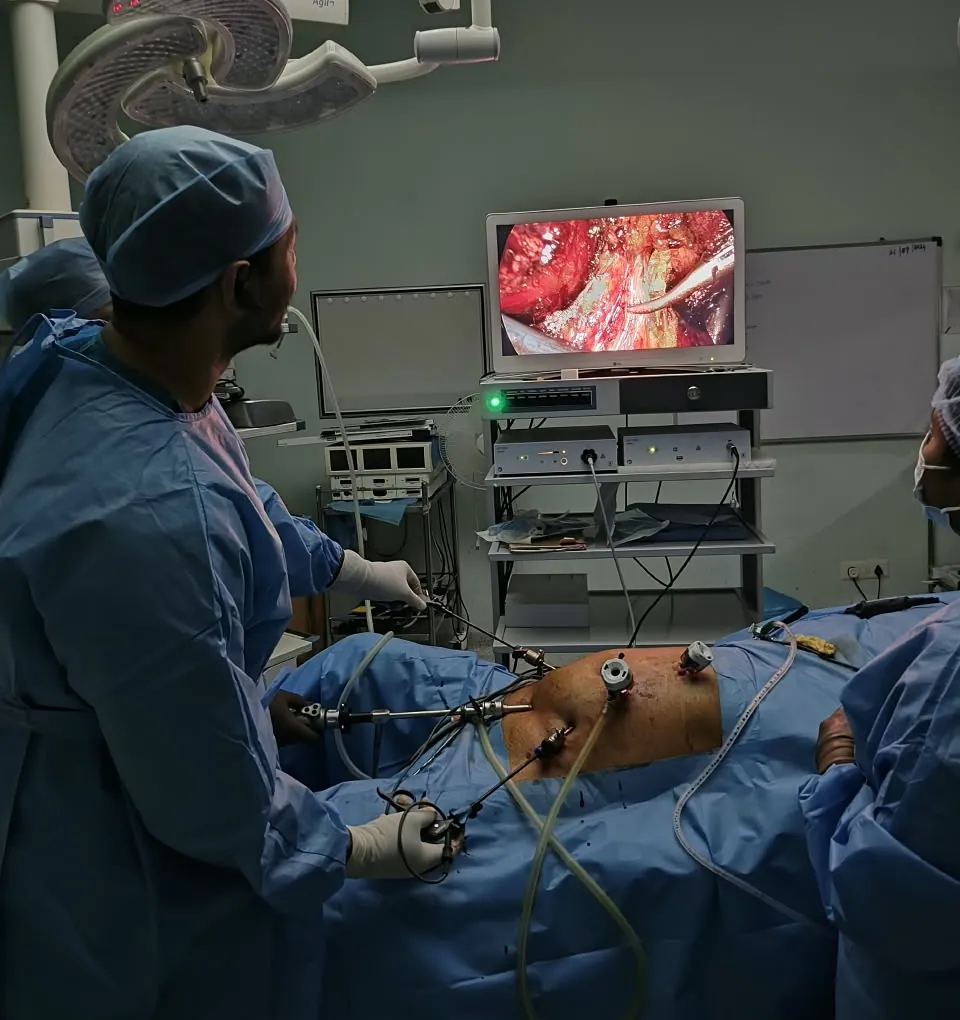
Through three small cuts away from the navel, a coated mesh is placed on the inside of the abdominal wall and fixed with tacks or stitches. Where possible, the gap is first closed with stitches (sometimes called IPOM-plus). This often suits larger defects, several defects, a higher body weight, or a hernia with divarication. Newer techniques that place the mesh outside the abdominal cavity are suitable for selected patients.
Dr. Sanjit's usual recommendation: for a small, single umbilical hernia, an open repair is simple, effective and less costly. For larger or multiple defects, or when weight or divarication is a factor, laparoscopic repair is usually the better fit. The final plan depends on your scan and is agreed with you at consultation.
How the procedure is done
- You are admitted on the day of surgery after fasting for about 6 hours.
- Open repair is done under general or spinal anaesthesia, and laparoscopic repair under general anaesthesia.
- In an open repair, a curved cut follows the lower or upper edge of the navel, the hernia contents are pushed back, and the gap is closed with or without a mesh.
- In a laparoscopic repair, the contents are freed from the inside, the gap is stitched closed where possible, and a coated mesh is fixed against the abdominal wall.
- The belly button is preserved and reshaped wherever possible.
Most umbilical repairs take about 30 to 90 minutes, depending on size and technique. Many patients go home the same day or the next morning.
Recovery: what to expect
| Time | What most patients can do |
|---|---|
| Day 0–1 | Walk, eat, go home the same day or next morning |
| Days 2–7 | Gentle walks; keep the navel wound clean and dry as advised |
| 1–2 weeks | Desk work, light household work, short drives when comfortable |
| 2–4 weeks | Two-wheeler riding, carrying a small child for short periods |
| 4–6 weeks | Heavy lifting, abdominal exercises and full sport, as advised |
After laparoscopic repair, the tack points can ache for a few weeks, and fluid sometimes collects where the hernia was (a seroma), which usually settles on its own. An abdominal binder may be advised for comfort.
Risks and how they are reduced
- Wound infection: the navel is a moist area, so wound care matters. Good hygiene, an antibiotic at surgery and controlled blood sugar help.
- Seroma: a fluid pocket under the skin, common after larger repairs and usually settles.
- Change in the look of the navel: it may look different, especially after a large hernia with stretched skin.
- Pain at fixation points: usually settles over weeks.
- Recurrence: more likely after stitch repair of larger defects, with obesity, smoking or a later pregnancy, which is why mesh is used for all but the smallest gaps.
- Injury to bowel: rare, and more of a concern when bowel is stuck inside the hernia.
Cost, and why patients from Sarjapur Road, HSR and Bellandur see Dr. Sanjit
The cost depends on the size of the defect, whether a mesh is needed, the type of mesh (a coated mesh for laparoscopic repair costs more), the hospital and the length of stay. Indicative ranges are on the hernia surgery cost page.
Dr. Sanjit is a General and Minimal Access Surgeon with an MS in General Surgery and the MRCS (Edinburgh), with about 18 years of surgical practice. Abdominal-wall hernia repair, including incisional and recurrent hernias, is central to his work. He consults and operates at SPARSH Hospital, Sarjapur Road, from 10 am to 5 pm, and sees patients at his evening clinic in Doddakannelli from 5 pm to 8 pm, Monday to Saturday. Book a consultation or send your ultrasound report on WhatsApp.
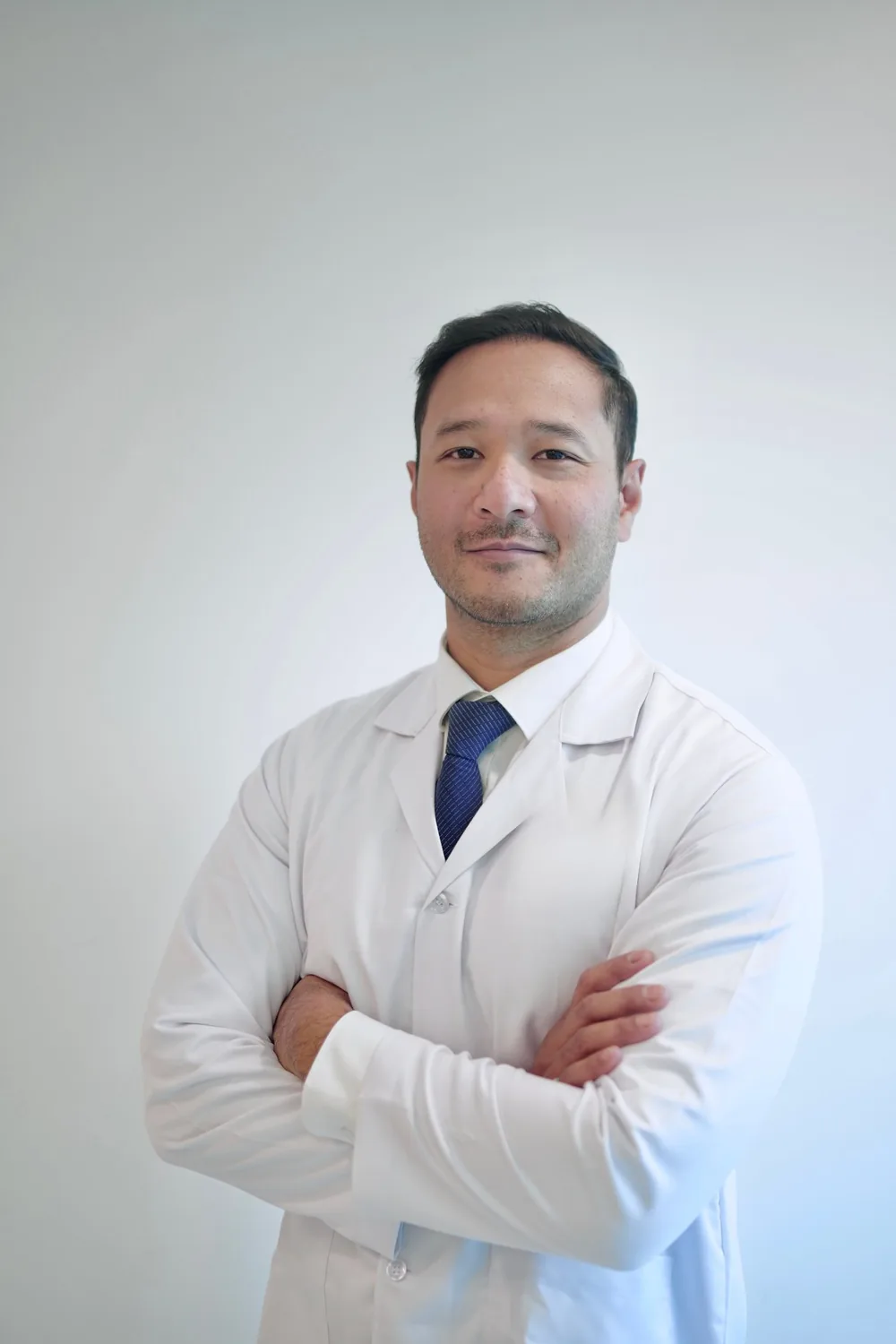
MBBS, MS (General Surgery), MRCS (Edinburgh). General and Minimal Access Surgeon with about 18 years in general, laparoscopic and laser surgery. Consults at SPARSH Hospital, Sarjapur Road (10 am – 5 pm) and his evening clinic in Doddakannelli (5 – 8 pm). KMC Reg. No. 96096. More about Dr. Sanjit