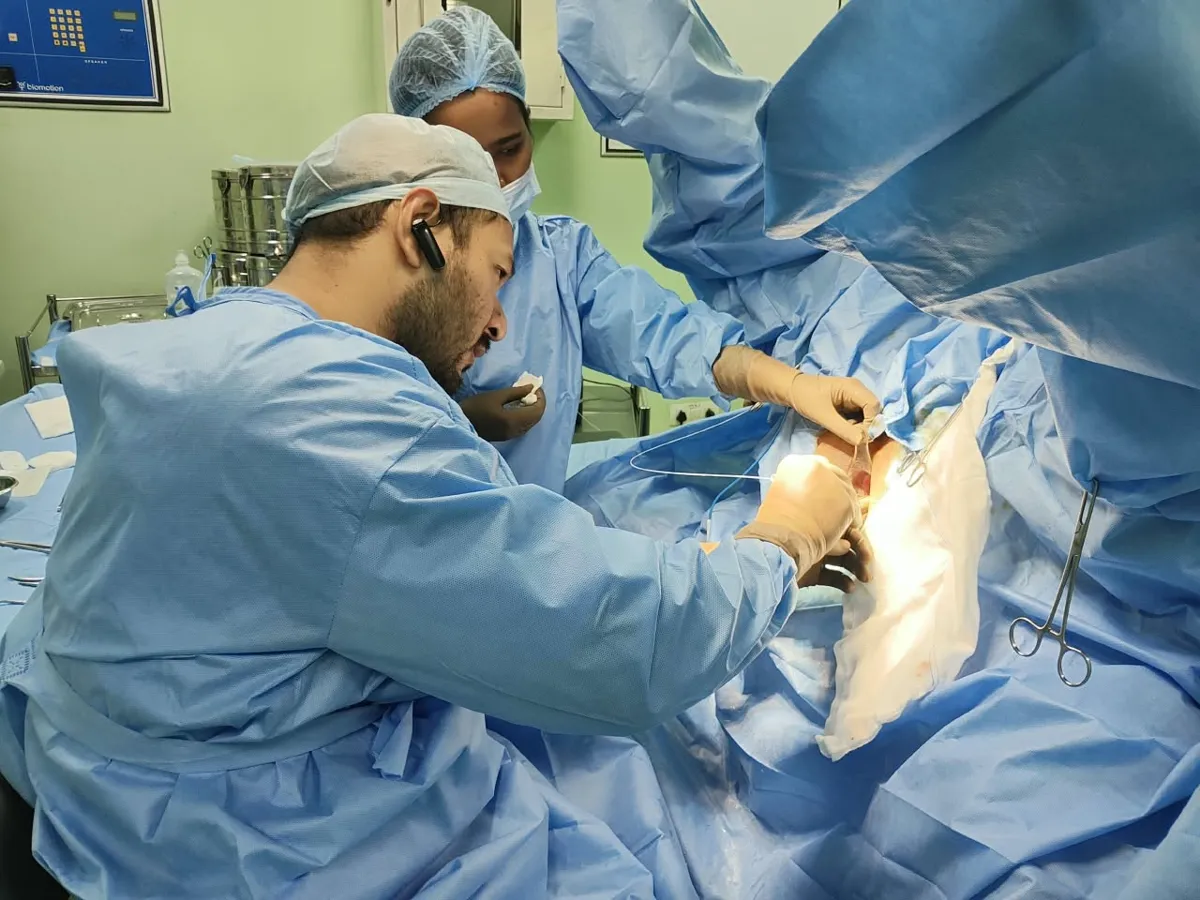


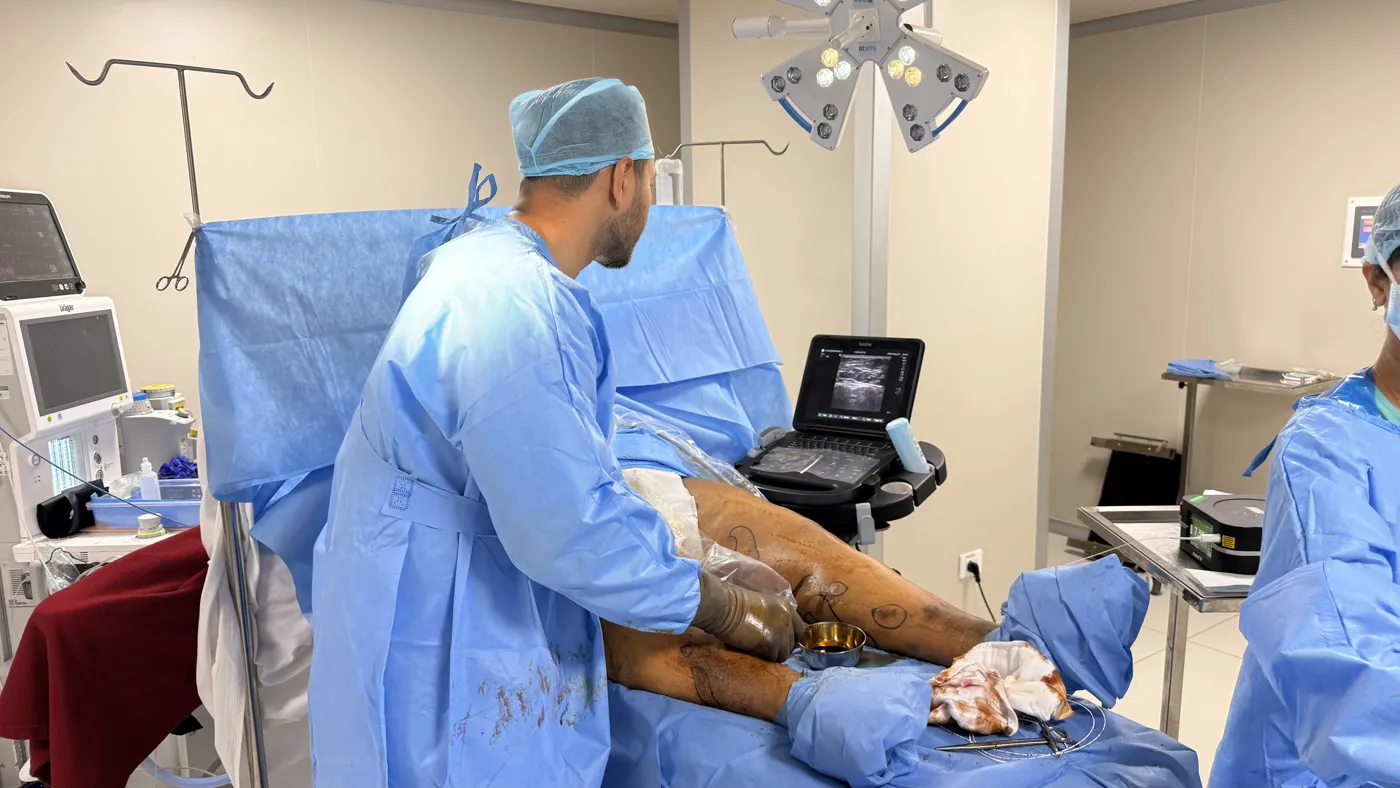

What is an anal fistula?
An anal fistula is a small tunnel that connects the inside of the anal canal to an opening on the skin near the anus. Most begin as an anal abscess: a tiny gland inside the anal canal gets infected, pus collects, and it bursts or is drained through the skin. In roughly a third to a half of people, studies report, the track it leaves behind does not seal and becomes a fistula.
Common symptoms
- A small opening near the anus that leaks pus, blood or watery discharge, staining underwear
- A boil that swells, bursts, settles and then comes back in the same place
- Pain and swelling that ease when the discharge drains
- Itching or irritation of the skin around the anus
Less commonly, a fistula is linked to Crohn's disease, tuberculosis (still relevant in India), previous surgery or radiation. These need a different plan, so they are looked for during assessment. Our guide on piles vs fissure vs fistula explains how fistula differs from the other two.
When to see a surgeon
See a surgeon if you have a discharging opening near the anus, or a boil there that has come back more than once. Antibiotics may calm the infection for a while, but they do not close the tunnel, so the cycle tends to repeat.
Diagnosis: MRI fistulogram and examination
Dr. Sanjit Gogoi examines the area, feels for the track, and uses a proctoscope to look for the internal opening. He then needs to know exactly how the tunnel runs in relation to the sphincter muscles, because that decides which operation is safe.
For most fistulas, especially recurrent ones or those with more than one opening, he advises an MRI fistulogram (an MRI of the pelvis with a fistula protocol). It shows the path of the tract, any branches or hidden abscesses, and how much muscle it crosses. He walks you through the images so you understand your own fistula.
Simple vs complex fistula
A simple fistula is low, crossing little or none of the sphincter muscle. A complex fistula crosses a larger part of the muscle, has several branches, is high, has come back after surgery, lies in front of the anus in women, or is linked to Crohn's disease. Complex fistulas need sphincter-sparing techniques and sometimes more than one stage.
Treatment options for anal fistula
Almost all fistulas need a procedure to heal. The aim is to clear the infected tract while keeping the sphincter, and your control of stool and gas, intact. The plan is decided with you after the MRI and examination.
Fistulotomy
For simple, low fistulas, the tunnel is laid open so it heals from the bottom up. It is a dependable operation with high healing rates in suitable patients. It is used only when very little muscle is involved.
Seton
A seton is a soft thread passed through the tract and tied loosely. It keeps the tunnel draining, prevents new abscesses and lets inflammation settle. It is often the first stage for complex fistulas before a definitive repair, and may stay in for weeks to a few months.
LIFT (ligation of intersphincteric fistula tract)
For fistulas that pass through the sphincter, the tract is tied off and divided in the space between the two sphincter muscles, without cutting either muscle. It is a sphincter-preserving option with reasonable healing rates in suitable cases.
Laser fistula closure (FiLaC)
A thin radial laser fibre is passed into the cleaned tract and withdrawn slowly, sealing it from inside without cutting muscle. Wounds are small, and for many patients there is usually less pain than conventional surgery and an early return to work. Healing and recurrence rates vary quite widely between studies, and some patients need a repeat procedure. Dr. Sanjit will tell you honestly whether laser suits your tract.
Other options, such as an advancement flap, are used for selected high fistulas. Fistulas linked to Crohn's disease or tuberculosis are treated together with medicines for the underlying condition.
How the procedure is done
- Before: MRI fistulogram, routine blood tests, a fitness check, and an enema on the morning of surgery. Any active abscess is drained first.
- Anaesthesia: spinal or general anaesthesia, decided with the anaesthetist.
- Mapping: under anaesthesia, the tract is gently probed and checked against the MRI to confirm the internal opening.
- Treatment: fistulotomy, seton, LIFT or laser, as planned. Tissue from the tract is sent for testing, including for tuberculosis when indicated. Most procedures take 30 to 60 minutes.
- Going home: many patients go home the same day or the next morning, depending on the procedure and their health.
Recovery: what to expect
| Procedure | Desk work | Usual healing |
|---|---|---|
| Laser (FiLaC) | Usually 2 to 5 days | About 4 to 8 weeks |
| LIFT | Usually 5 to 7 days | About 4 to 8 weeks |
| Fistulotomy | Usually 1 to 2 weeks | About 6 to 12 weeks |
| Seton | Usually a few days | Stays until the next stage |
Expect some discharge from the wound while it heals. Sitz baths two to three times a day and after motions keep the area clean. Pads help protect clothing. Stool softeners and fibre prevent straining. Follow-up visits let Dr. Sanjit check that the wound is healing from the inside out.
Risks and how they are reduced
- Recurrence: fistulas can come back after any method. Rates depend on the type of fistula and technique; they are lowest after fistulotomy for simple tracts and higher after sphincter-sparing methods for complex ones. Accurate MRI mapping lowers the risk of missing a branch.
- Change in control: dividing sphincter muscle can affect control of gas or stool. This is why fistulotomy is limited to low tracts, and sphincter-sparing methods are preferred whenever more muscle is involved.
- Slow wound healing, bleeding or infection: reduced by careful wound care, sitz baths and regular follow-up.
- More than one operation: complex fistulas often need staged treatment. Knowing this from the start helps you plan time off work.
Cost of fistula surgery in Bangalore
Cost depends on the type of fistula, the technique (fistulotomy, seton, LIFT or laser), the need for an MRI fistulogram, whether more than one stage is needed, and the hospital and room type. Indicative 2026 ranges are on the piles, fissure and fistula surgery cost page. For an estimate for your case, book a consultation and bring any MRI or reports you have.
Why patients from Sarjapur Road, HSR and Bellandur see Dr. Sanjit
Dr. Sanjit holds an MS in General Surgery and the MRCS from the Royal College of Surgeons of Edinburgh, with about 18 years in general, laparoscopic and laser surgery. Laser proctology, including piles, fissure and pilonidal sinus, is a regular part of his practice.
With fistula, he is clear that protecting the sphincter comes first and that complex fistulas may need more than one step. You will know the plan, the likely number of stages and the trade-offs before you agree to anything.
He consults and operates at SPARSH Hospital, Sarjapur Road (Carmelaram) from 10 am to 5 pm, and sees patients at the evening clinic in Doddakannelli (3rd Floor, SGR-2, Sarjapur Main Road) from 5 pm to 8 pm, Monday to Saturday, by appointment. For families in Sarjapur Road, HSR Layout and Bellandur, that is a short drive (roughly 20 minutes from Bellandur and 25 from HSR Layout, traffic permitting), with an evening slot after work if you need one.
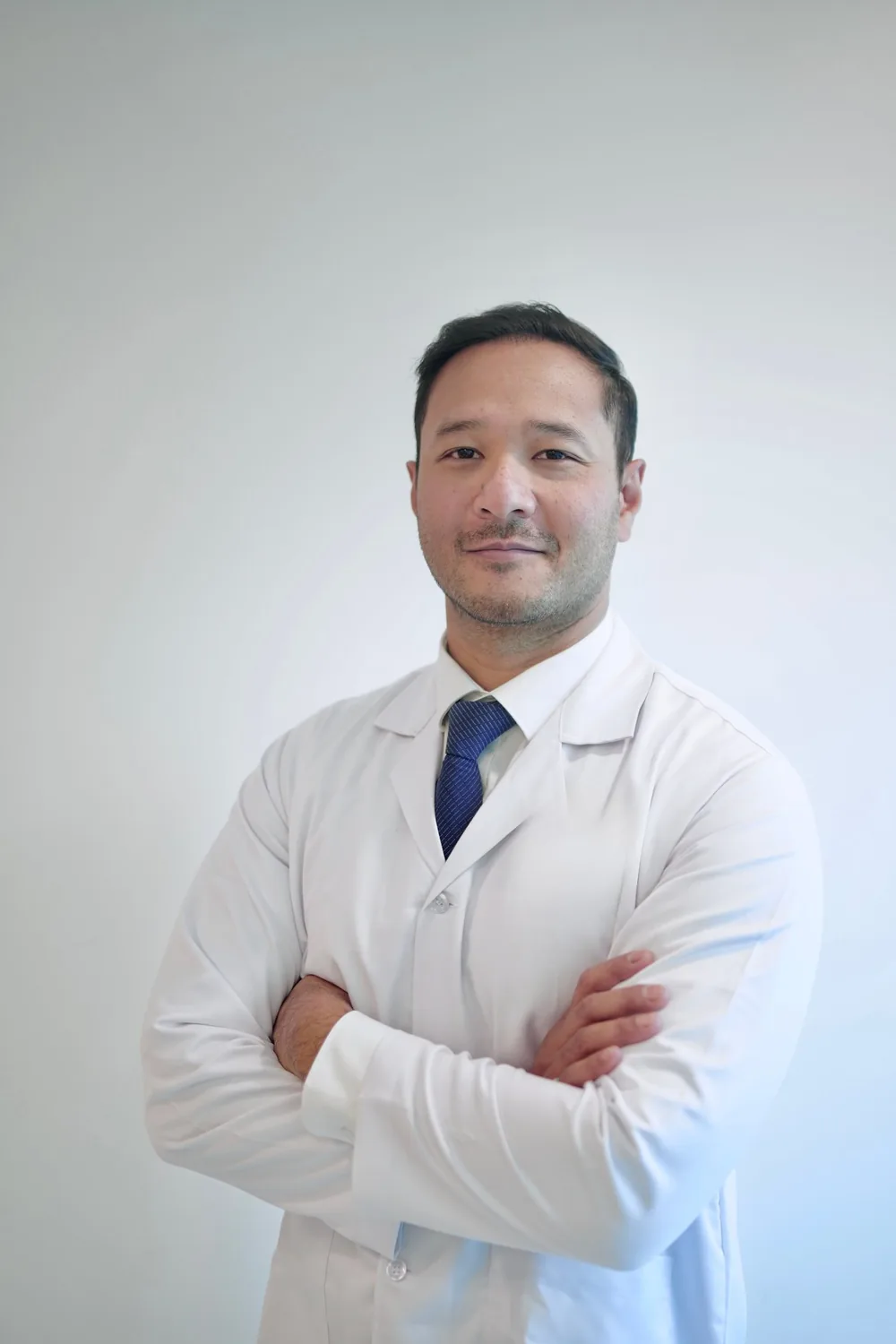
MBBS, MS (General Surgery), MRCS (Edinburgh). General and Minimal Access Surgeon with about 18 years in general, laparoscopic and laser surgery. Consults at SPARSH Hospital, Sarjapur Road (10 am – 5 pm) and his evening clinic in Doddakannelli (5 – 8 pm). KMC Reg. No. 96096. More about Dr. Sanjit