



What is appendicitis?
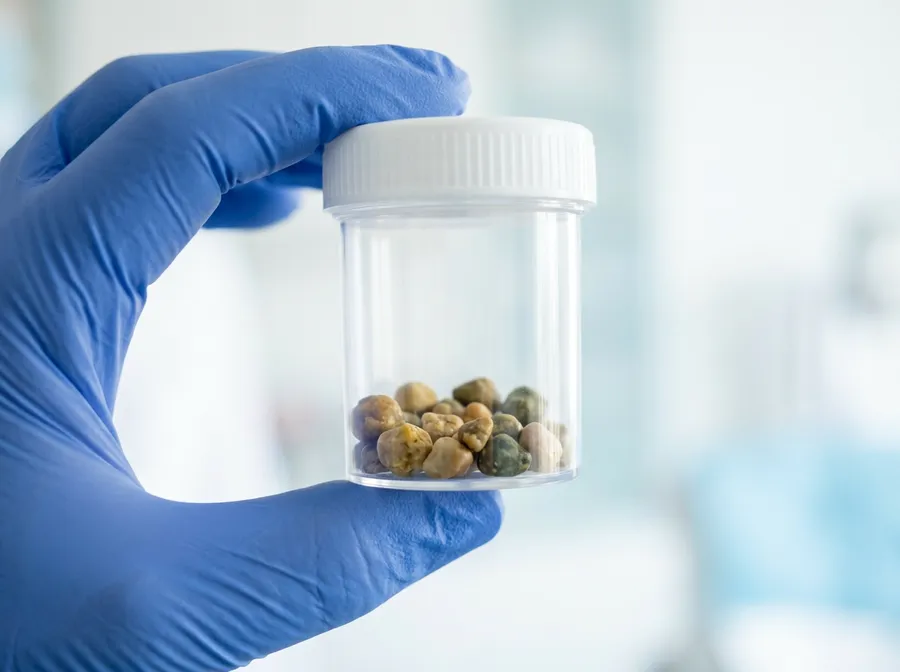
The appendix is a small, finger-shaped pouch attached to the large intestine in the lower right abdomen. Appendicitis is inflammation of the appendix, usually when its opening gets blocked, for example by a hard piece of stool (an appendicolith) or swollen lymph tissue, and bacteria multiply inside.
It can happen at any age but is most common between about 10 and 30 years. Worldwide, it is one of the commonest reasons for emergency abdominal surgery.
Typical symptoms develop over 12 to 48 hours:
- Pain that starts around the belly button and moves to the lower right abdomen
- Pain that worsens when you walk, cough, or go over a speed breaker in an auto or on a two-wheeler
- Loss of appetite, nausea or vomiting
- A mild fever
- Sometimes constipation, loose stools or a frequent urge to pass urine
Not everyone has this classic pattern. In children, older people, pregnant women and people whose appendix lies in an unusual position, the pain can be vague or felt somewhere else.
When to see a surgeon: treat it as urgent
Appendicitis does not get better by waiting at home. If the inflamed appendix bursts (perforates), infection spreads inside the abdomen and can cause peritonitis or an abscess, a much more serious illness with a longer recovery. The risk of perforation rises the longer it goes untreated.
Children
Appendicitis is a common cause of surgical tummy pain in children, who may not describe the pain clearly. A child whose pain keeps getting worse, who refuses food, vomits repeatedly or does not want to walk should be seen by a surgeon urgently, at an emergency department if needed.
Pregnancy
Appendicitis is the most common non-obstetric reason for surgery during pregnancy. As the womb grows, the appendix is pushed upwards, so the pain may be higher on the right side. Any new, persistent abdominal pain in pregnancy needs urgent assessment by your obstetrician and a surgeon together.
Diagnosis: how appendicitis is confirmed
Diagnosis starts with a careful history and examination, looking for tenderness in the lower right abdomen and signs that the lining of the abdomen is irritated. Dr. Sanjit explains what he finds and what each test is for.
- Blood tests: a raised white cell count and CRP support infection.
- Urine test: to look for a urinary infection or kidney stone. Women of child-bearing age also have a pregnancy test.
- Ultrasound: the first scan for children, pregnant women and slim adults. It avoids radiation but cannot always see the appendix.
- CT scan: the most accurate test in adults. It also shows whether the appendix has perforated or formed an abscess, which changes the plan.
- MRI: used in pregnancy when ultrasound is not clear.
Several conditions can mimic appendicitis, including ovarian cysts, ectopic pregnancy, kidney stones, urinary infection and gastroenteritis. Pain high on the right side, under the ribs, is more often from the gallbladder (see gallbladder stone surgery).
Treatment options
Laparoscopic appendicectomy
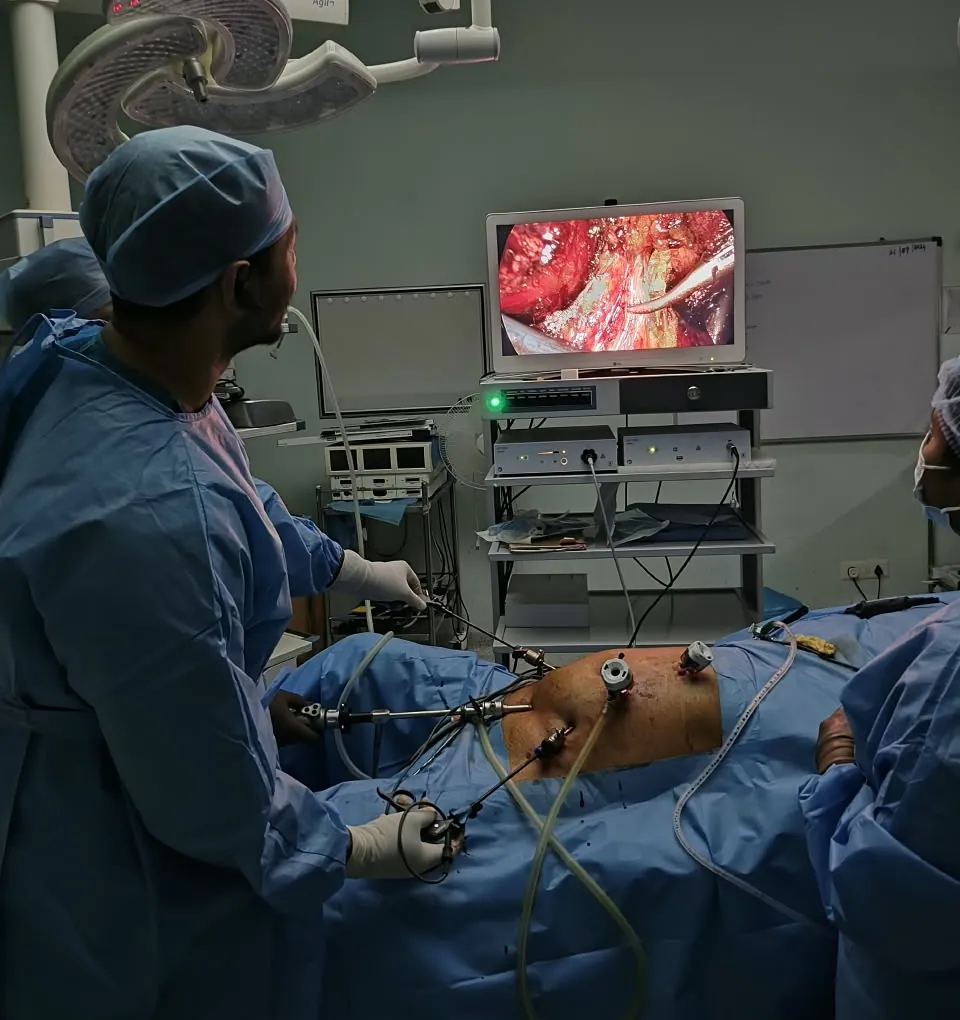
Removing the appendix by keyhole surgery is the standard treatment for acute appendicitis in most adults and children. The camera lets the surgeon inspect the whole abdomen, which helps when the diagnosis is uncertain, and it usually means less pain, smaller scars and an earlier return to normal activity than open surgery. Read more about laparoscopic surgery.
Antibiotics first, in selected cases
For uncomplicated appendicitis confirmed on a CT scan, large trials have shown that antibiotics alone can be a reasonable option for some adults. It deserves an honest discussion. The trade-offs:
- Most patients treated this way avoid an operation in the short term.
- Studies report that roughly a quarter to two-fifths go on to need appendicectomy within one to five years, often because appendicitis returns.
- Antibiotics are less likely to work, and complications are more common, when an appendicolith is present.
- It still needs a hospital stay and monitoring at the start, and a clear plan if symptoms return.
Dr. Sanjit will tell you whether you are suitable for this approach, which option he recommends, and why.
Open appendicectomy
An operation through a small cut in the lower right abdomen is still used occasionally, when keyhole surgery is not possible or safe. Results are good, with a slightly longer recovery.
How laparoscopic appendicectomy is done
- Preparation: once the diagnosis is made, you are given intravenous fluids, pain relief and antibiotics.
- Anaesthesia: the operation is done under general anaesthesia.
- Ports: usually three small cuts, one at the belly button and two lower on the abdomen, each about 5 to 12 mm.
- Inspection: the abdomen is gently filled with carbon dioxide and the camera is used to look at the appendix and the rest of the abdomen.
- Removal: the appendix is separated from its blood supply, its base is closed with loops, clips or a stapler, and it is removed in a bag through a port.
- Washout: if there is pus, the area is washed and suctioned, and a drain is sometimes left for a day or two.
An uncomplicated operation usually takes about 30 to 60 minutes. The appendix is sent to the laboratory for examination, which is routine.
If the appendix has perforated
A perforated appendix usually means a longer operation, a thorough washout, a course of intravenous antibiotics and a stay of several days. When an abscess has already formed, some patients are treated first with antibiotics and drainage under ultrasound or CT guidance, and the appendix may be removed later if needed. For older adults treated this way, a follow-up scan or colonoscopy is often advised, because occasionally a growth can present like appendicitis.
Recovery: what to expect
| When | What most patients can expect |
|---|---|
| Day of surgery | Walking within a few hours; sips of water, then a light diet. |
| Days 1–2 | Going home after an uncomplicated operation. After perforation, the stay is often 3–7 days. |
| Week 1 | Port-site soreness and any shoulder-tip ache settle. Light activity and short walks. |
| Weeks 1–2 | Back to desk work or college for most. Children usually return to school in about 1–2 weeks. |
| Weeks 2–4 | Gradual return to sport, gym and heavy lifting, as per your written plan. |
Call the team if you develop fever, increasing pain, repeated vomiting, a swollen abdomen, or redness and discharge from a wound. These can be signs of an infection or abscess that needs attention.
Risks and how they are reduced
Laparoscopic appendicectomy is a common, well-established operation, and most patients recover without problems. Possible complications include:
- Wound infection, usually minor and treated with dressings or antibiotics
- An abscess inside the abdomen, more likely after perforation, sometimes needing drainage
- Bleeding, rarely needing further treatment
- A slow return of bowel function (ileus) for a day or two, with bloating or nausea
- Leak from the appendix stump or injury to nearby bowel or bladder, both rare
- Port-site hernia, uncommon
- General risks of anaesthesia, chest infection and blood clots, reduced by early walking
Sometimes the appendix turns out to be normal and another cause of pain is found; the camera view helps identify it. Risks are reduced by early diagnosis, antibiotics at the right time, careful technique, a thorough washout when there is pus, and clear advice on warning signs after discharge.
Why patients from Sarjapur Road, HSR and Bellandur see Dr. Sanjit
Dr. Sanjit holds an MS in General Surgery and the MRCS from the Royal College of Surgeons of Edinburgh, with about 18 years in general, laparoscopic and laser surgery. Laparoscopic appendicectomy, including emergency surgery, is a regular part of his work, and he explains the findings and the plan to you and your family in simple terms.
By day he assesses and operates at SPARSH Hospital, Sarjapur Road (10 am to 5 pm). His evening clinic in Doddakannelli (5 pm to 8 pm) is for consultations and follow-up, for example after appendicitis treated with antibiotics, not for emergencies. Both are on Sarjapur Main Road, close to Sarjapur Road neighbourhoods, HSR Layout and Bellandur.
Cost of appendix surgery in Bangalore
The cost depends mainly on whether the appendicitis is uncomplicated or perforated, the scans needed, the number of days in hospital, the hospital and your room category. Check your health insurance policy terms for cover. For an estimate for your situation, contact the team.

MBBS, MS (General Surgery), MRCS (Edinburgh). General and Minimal Access Surgeon with about 18 years in general, laparoscopic and laser surgery. Consults at SPARSH Hospital, Sarjapur Road (10 am – 5 pm) and his evening clinic in Doddakannelli (5 – 8 pm). KMC Reg. No. 96096. More about Dr. Sanjit