


The short answer
Worry about varicose veins when they start causing symptoms or changing the skin: aching, heaviness or swelling of the legs, brown or itchy skin near the ankle, an ulcer, a vein that bleeds, or a vein that suddenly becomes hard, red and painful. A calf that is suddenly swollen and painful, especially on one side, needs same-day medical attention.
Many people have visible veins for years without problems. Varicose veins are rarely an emergency, but they tend to worsen slowly, and treating them before the skin is damaged is usually simpler.
What varicose veins are
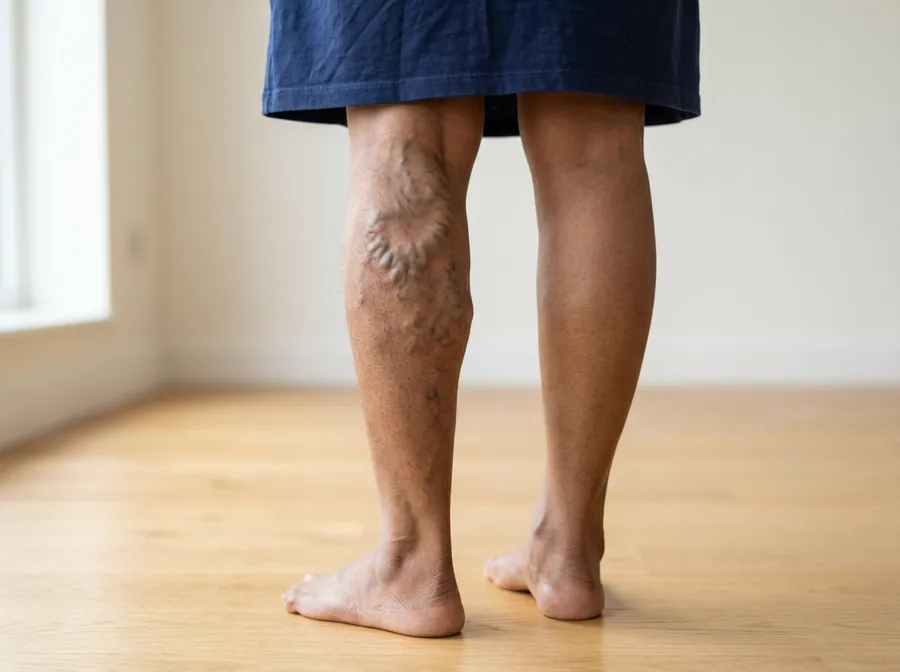
Leg veins carry blood back up to the heart against gravity. Small one-way valves inside them stop the blood from falling back down. When these valves weaken, blood pools in the veins, the pressure rises, and the veins stretch into the twisted, bulging cords you see under the skin, most often on the calf and the inner side of the leg.
Fine red or purple thread veins (spider veins) are different. They are tiny vessels in the skin and are mostly a cosmetic concern, although they can sit alongside larger varicose veins.
Why do veins look blue?
The blood in your veins is dark red, not blue. Veins look blue or greenish because of how light travels through skin. Red light goes deeper into the skin than blue light, and over a vein much of that red light is absorbed by the blood. Less red light comes back to your eye from that spot than from the skin around it, so the vein looks bluish by contrast.
The colour of a vein tells you little about whether it is healthy. Size, bulging, and the symptoms below matter far more.
Who gets varicose veins
The main risk factors are a family history, getting older, being female, pregnancy, extra weight and, very commonly in Bangalore, jobs that keep you on your feet for long hours. Teachers, traffic police, retail and mall staff, salon workers, security staff, nurses and cooks often notice their legs aching and swelling by the end of a shift. Long hours sitting still, at a desk or on a commute, do not help either.
Pregnancy is a common trigger. Hormones relax the vein walls, blood volume rises and the growing womb presses on the veins in the pelvis. Veins often appear or worsen during pregnancy and improve in the months after delivery. Compression stockings can ease symptoms, and any procedure to close veins is usually planned some months after the baby is born.
Signs you should get checked
Book a consultation with a surgeon who treats veins if you have any of the following:
- Pain, aching or heaviness in the legs that is worse at the end of the day and better when you raise your legs, or frequent night cramps.
- Swelling around the ankles that leaves a deep mark from your socks by evening.
- Skin changes near the ankle: brown or darkened skin, dry itchy patches (venous eczema), or skin that feels hard and tight. These mean long-standing high pressure in the veins is starting to damage the skin.
- An ulcer: a sore near the ankle that has not healed within about two weeks, or one that healed and came back.
- Varicose veins that have returned after earlier treatment.
Guidelines such as those from NICE in the UK recommend specialist assessment for people with symptoms, skin changes, a previous clot in a surface vein, or a leg ulcer, not only for cosmetic reasons.
Signs that need urgent or emergency care
A bleeding varicose vein
A varicose vein near the ankle can bleed heavily after a small knock or scratch, sometimes in the shower. Lie down, raise the leg above the level of your heart and press firmly on the spot with a clean cloth for at least 10 minutes. Then get medical help the same day, because a vein that has bled once can bleed again and usually needs treatment.
A hard, red, painful vein
If a varicose vein suddenly turns into a hard, tender, warm red cord, it is likely to be superficial thrombophlebitis: a clot with inflammation in a surface vein. It is often not dangerous by itself, but it should be checked within a day or two, usually with an ultrasound, because in some people the clot lies close to, or extends into, the deep veins.
Signs of a deep vein clot (DVT)
Varicose veins are surface veins, but people who have them carry a somewhat higher risk of clots in the deep veins of the leg.
What treatment looks like today
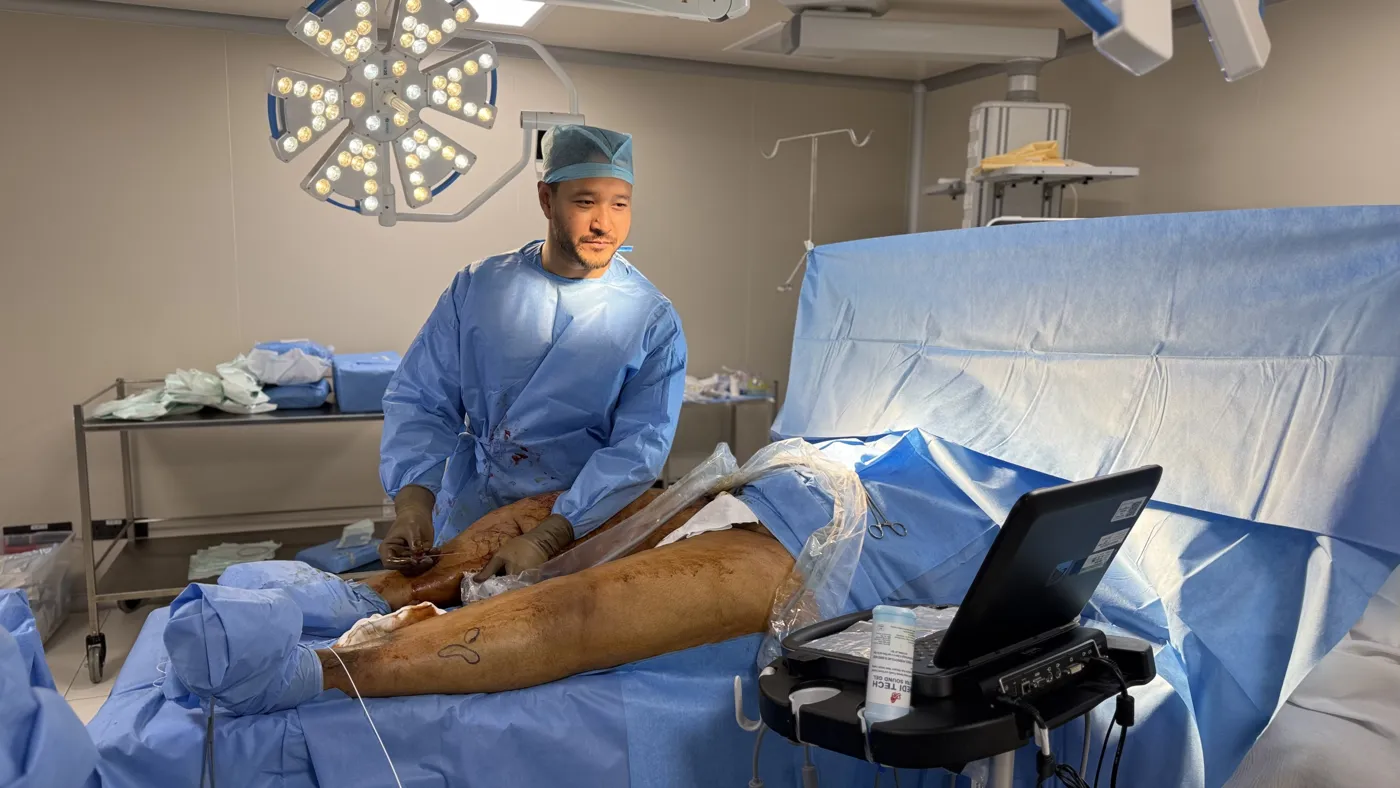
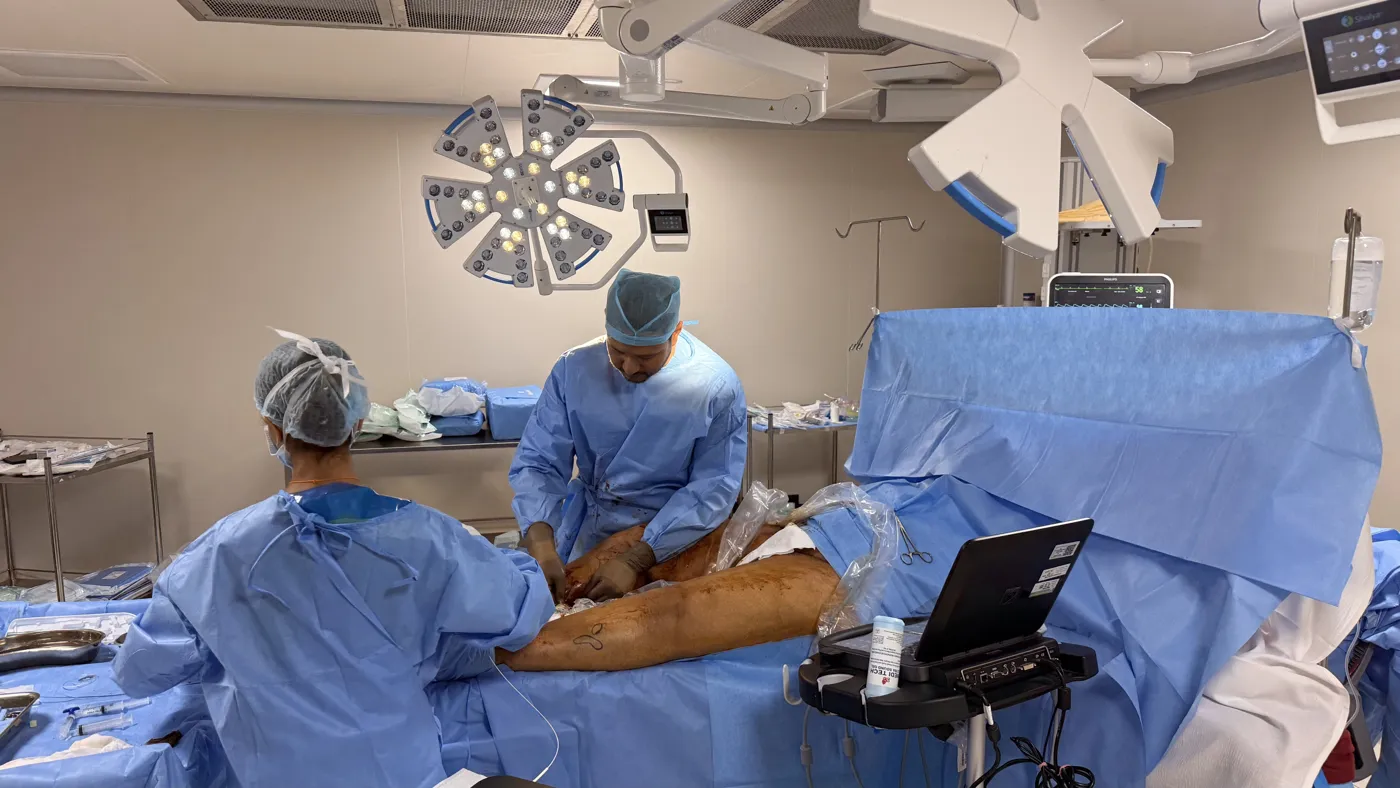
Most varicose veins are now treated without the older operation of stripping the vein out through cuts in the groin and leg. Under ultrasound guidance, the faulty vein is closed from the inside through a needle puncture, either with heat from a laser fibre (endovenous laser ablation, EVLA) or with a medical glue (cyanoacrylate closure). Blood then reroutes through healthy veins. These procedures are usually done under local anaesthesia as day care, and most people are walking the same day.
Compression stockings ease symptoms and are useful when a procedure is not suitable, but they do not close the faulty vein. The options are explained on the varicose veins treatment page, and the varicose vein treatment cost guide covers what affects the price in Bangalore.
When to see a surgeon
If your veins ache, your ankles swell, or the skin near your ankle is changing colour, it is worth an assessment before an ulcer develops. The key test is a venous duplex (Doppler) ultrasound, which shows which valves are leaking and helps plan treatment.
Dr. Sanjit Gogoi is a General and Minimal Access (Laparoscopic) Surgeon who performs ultrasound-guided EVLA and glue closure for varicose veins. He will examine your legs, go through your Doppler report with you, and explain whether stockings, observation or a procedure suits you.
Dr. Sanjit consults at SPARSH Hospital, Sarjapur Road from 10 am to 5 pm and at his evening clinic in Doddakannelli from 5 pm to 8 pm, Monday to Saturday, which suits many people coming after a long shift. Both are a short drive from Sarjapur Road, HSR Layout and Bellandur. Book a consultation or send your Doppler report on WhatsApp to +91 99160 26256.
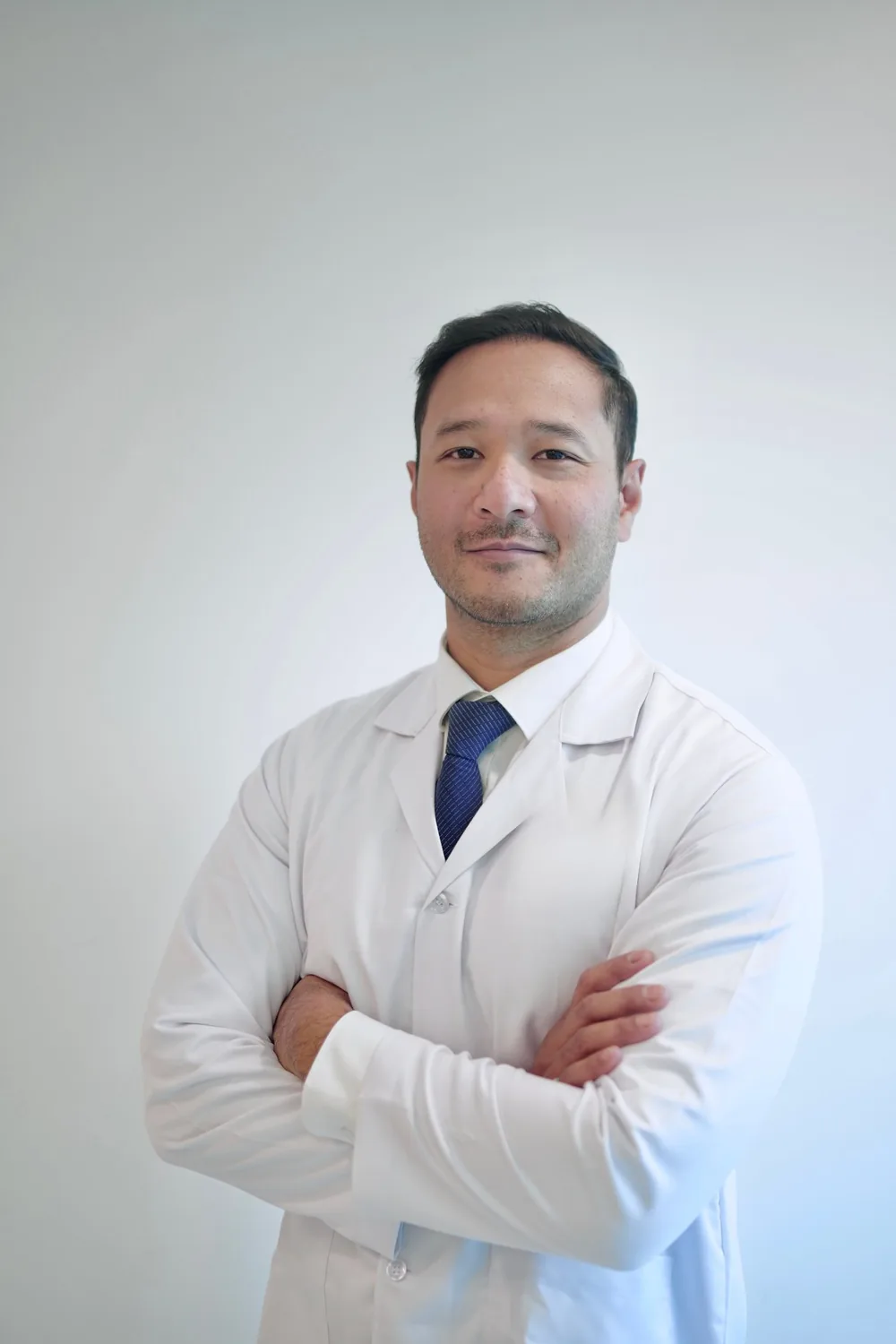
MBBS, MS (General Surgery), MRCS (Edinburgh). General and Minimal Access Surgeon with about 18 years in general, laparoscopic and laser surgery. Consults at SPARSH Hospital, Sarjapur Road (10 am – 5 pm) and his evening clinic in Doddakannelli (5 – 8 pm). KMC Reg. No. 96096. More about Dr. Sanjit